Dry fix or mortar for ridge & hip tiles?
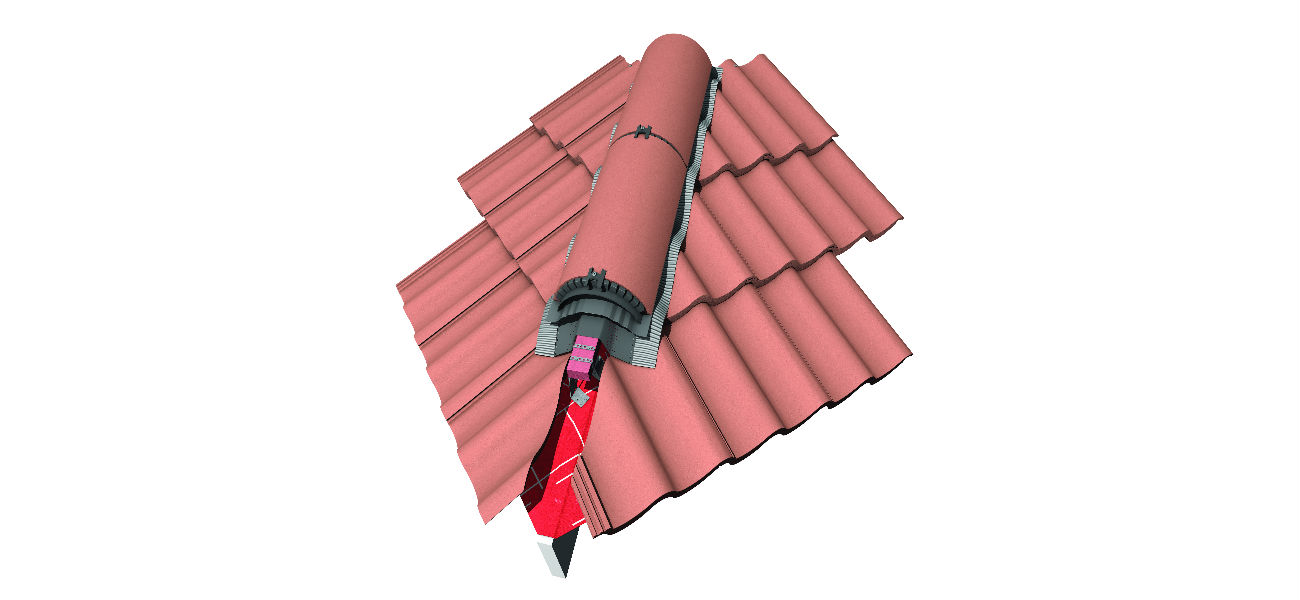

That’s why dry-fix systems, which use mechanical fasteners such as nails, screws or clips to secure roof tiles without a mortar bedding, are now the most widely used method for fixing roof tiles in both new-build and refurbishment projects. They provide a reliable, low-maintenance method that conforms with BS standards, as well as industry guidance and home warranties.
BS 5534 requires mechanically fixed ridge and hip tiles
BS 5534:2014+A2:2018 is the British Standard Code of Practice for slating and tiling on pitched roofs and vertical cladding.Before 2014, mechanical fixings were required only in high-wind locations or for specific tile types. Mortar bedding on its own was still commonly accepted.
“The 2014 revision made it clear that the tensile strength of mortar alone could no longer be relied upon to fix things like ridge tiles, hip tiles etc. and that all bedded roof tiles and fittings should include mechanical fixings. explains Kevin Taylor, Training and Technical Support Manager at Marley. “The 2018 amendment further clarified certain requirements following the introduction of BS8612, which is the test specification for dry verge, hip and ridge systems,” he adds.
It should be noted that whilst BS 5534 is a code of practice, and not a legal requirement on its own, it effectively becomes a legal entity where it is referenced in any contract documents. Where failures occur, the responsibility for deviating from the standard (or manufacturer’s instructions) falls on the person responsible for the work. The 2018 revision of BS5534 also refers to BS8612, which means that only those dry verge, ridge and hip products which have been properly tested can be used to gain compliance. “Mechanical fixing of bedded tiles and fittings is also expected under NHBC standards, typical roofing warranties and by local authority building control,” Kevin notes.
The benefits of dry-fix roof products
Dry-fix roofing systems offer several advantages over traditional mortar-bedded methods. These include:
- Secure and consistent: With dry-fix systems, each tile is mechanically fixed in place, ensuring long-term stability.
- Faster, safer installation: There's no need to carry heavy buckets of mortar onto the roof, and curing times don't need to be factored in.
- Weather flexibility: Dry-fix systems can be installed in most conditions that are safe for installers. In contrast, mortar bedding requires dry conditions and temperatures between 5°C and 25°C to cure.
- Resistant to movement and weather exposure: Dry-fix systems can withstand extreme weather and movement, unlike mortar joints, which are susceptible to cracking and weathering – particularly where structural movement occurs.
- Low maintenance: Once installed, dry-fix components require minimal maintenance, while mortar may need regular inspection and repairs.
- Cost-effective: Faster installation, reduced labour requirements and limited maintenance make dry-fix systems more economical over the life of the project.
- Integrated ventilation: Many dry-fix systems include built-in ventilation, such as continuous ridge or eaves ventilation, helping to prevent condensation and improve roof performance.
Mortar ridge and hip beddings for heritage properties
While dry fix should be the preferred method for new roofs and standard re-roofing works, there are some instances where it may still be necessary to use mortar only, such as heritage properties or listed buildings, where a traditional appearance must be preserved.
“In these circumstances, the mortar bedding may not have to be combined with mechanical fixings, but building owners need to be aware that that part of the works will fall outside the scope of BS 5534” Kevin explains.
BS5534 recommends a mix ratio of one part cement to three parts sand with plasticiser. It should be a mix based on at least one-part sharp sand with two-parts soft sand (or a sand which naturally has a blend of both) added to achieve the required strength and durability. Pre-mixed roof mortars which just require water adding to them are also available as an alternative to traditional sand and cement mixes.
Marley dry-fix roof products
Marley offers a complete range of dry-fix systems designed to make installation faster, easier and more consistent, while helping to ensure compliance with BS 5534.
From ridges and hips to verges and abutments, Marley’s dry-fix solutions deliver long-term performance, reduced maintenance and a professional finish.
To find out more, browse our product pages online or contact a member of our team.
Disclaimer - The information shared in this blog is correct at the time of publication. Guidance, standards, and best practices may change over time, so if you’d like further clarification or the latest updates, please get in touch with the Marley Technical Advisory Team, who will be happy to help.
Category: Accessories Ridge Tiles Roofing Technical